The short answer: Combining breathwork with strength training can help you lift from a better position, manage pressure through your core and recover between sets. Inside Loa, that looks like starting and ending class with intentional breathing, using alternating strength moves to facilitate ribcage rotation, and paying attention to how your whole body is positioned to manage pressure, versus focusing solely on the target muscle.
If you follow me on Instagram (@dr.lauren.shelton) then you know breathing is a BIG part of how I think about the body.
Why Breathing Matters for Strength Training
Our bodies aren’t perfectly symmetrical. Our left and right sides are not mirror images of one another (your heart sits more to the left, your liver to the right, and even your diaphragm is shaped a little differently on each side).
But did you know how we breathe influences how we move?
When your ribcage can expand and compress well, your diaphragm and core can do their job managing pressure, which supports everything from your posture to how you lift.
So how do we bring breathwork into a virtual fitness setting… where the goal is building muscle in a way that feels good?
3 Ways We Combine Breathwork and Strength Training
1. Classes start and end with breath
If our breath shapes our movement, then it’s the perfect place to start.
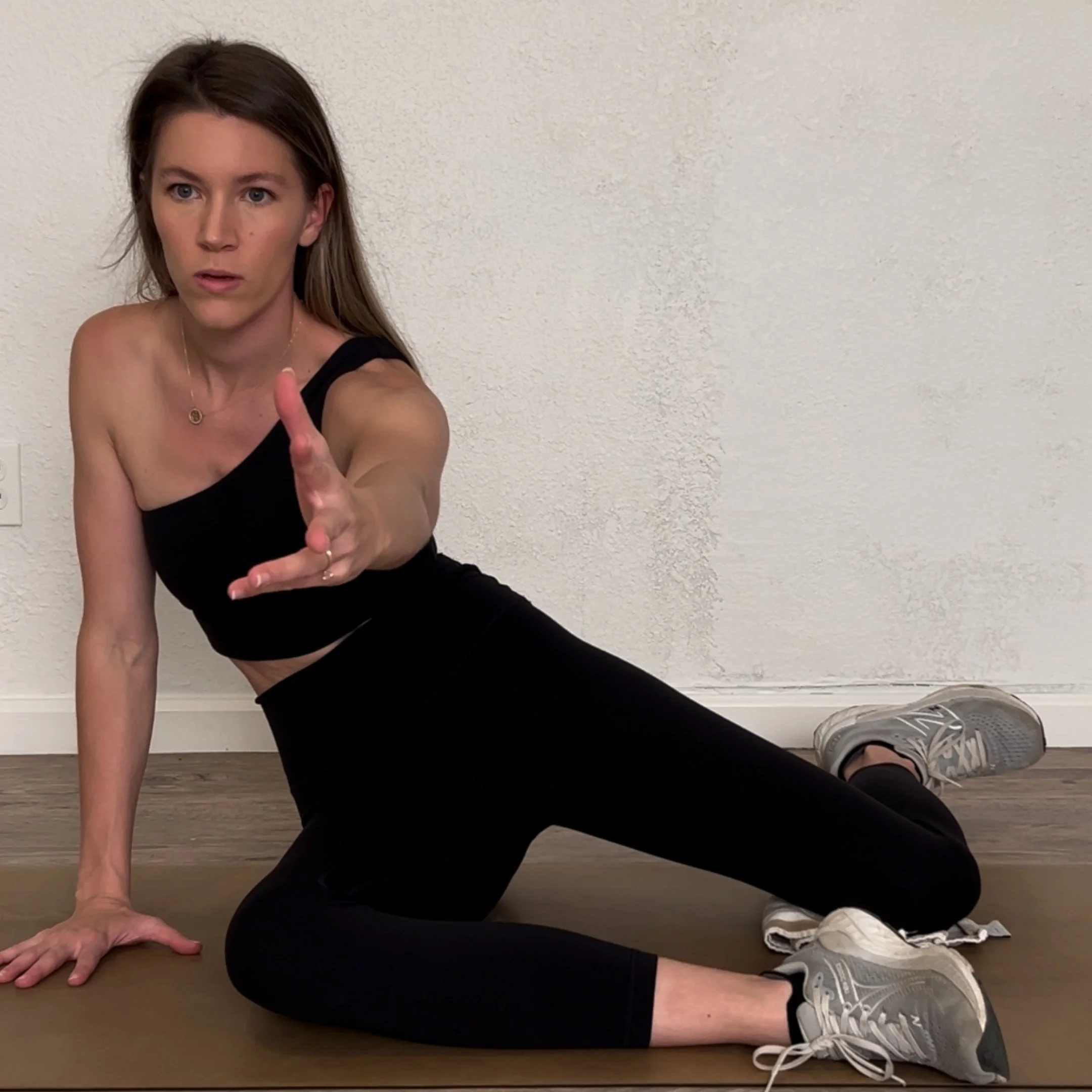
You’ll see we sometimes breathe in positions that aren’t the same on the right and left sides, because our bodies aren’t perfectly symmetrical. The goal is to breathe in positions that help your ribcage expand and your body settle into a better starting point before you lift.
We end class with breath too, so you’re set up for life off the mat once class is over.
New to this kind of breathing? Start with 360 Breathing: Why Your Ribcage Should Move When You Breathe.
2. Alternating strength movements
One of the simplest ways to help your body move well on both sides is… alternating.
So instead of always pressing both dumbbells at once, you’ll often see us alternate: pressing right, then left, then right, then left, and so on.
It may seem simple, but it feels totally different in our bodies. When we chest press with both arms at once, our body naturally wants to extend (think arching your back).
BUT, when we alternate, our body naturally wants to rotate! Totally different experience.

3. Consider the full body in every movement
Our body experiences everything in all places.
A chest press isn’t only happening to your chest muscles, but to your entire body. We are a system.
That’s why we care about the POSITION of your ENTIRE body.
You can perform a chest press lying on your back, arching your spine and flaring your ribcage… OR, you can perform it in a 90/90 position (hips and knees bent to 90 degrees, feet up on a wall or bench) where your shoulders have a better relationship with your ribcage and you’re able to breathe effectively.

Want to go deeper? Read Arching Your Back During a Bench Press or Chest Press.
Frequently Asked Questions
Should you hold your breath when lifting weights?
For most everyday strength training, you don’t need to. A common approach is to exhale through the hardest part of the movement and inhale as you return. During heavy lifts, it’s normal to briefly brace and hold your breath.
Should I do breathwork before or after a workout?
Both! A few slow breaths before you lift can help you find a better starting position, and breathing at the end can help your body shift out of “workout mode” and into recovery.
Do alternating exercises build as much strength?
Yes. Alternating moves still challenge your muscles, and they add a rotation and stability challenge that works your core too. Just choose a weight that makes the last few reps feel challenging.
What is the 90/90 position?
It’s lying on your back with your hips and knees bent to 90 degrees and your feet on a wall. It’s a great position to perform upper body movements, especially if you tend to feel your neck working too much!
Feel the Difference in Your Body
If you’re ready to feel the difference, come take class with us! Every Loa class is led by a Doctor of Physical Therapy, with breath built in from start to finish.