
Do I Need Pelvic Floor Workouts?
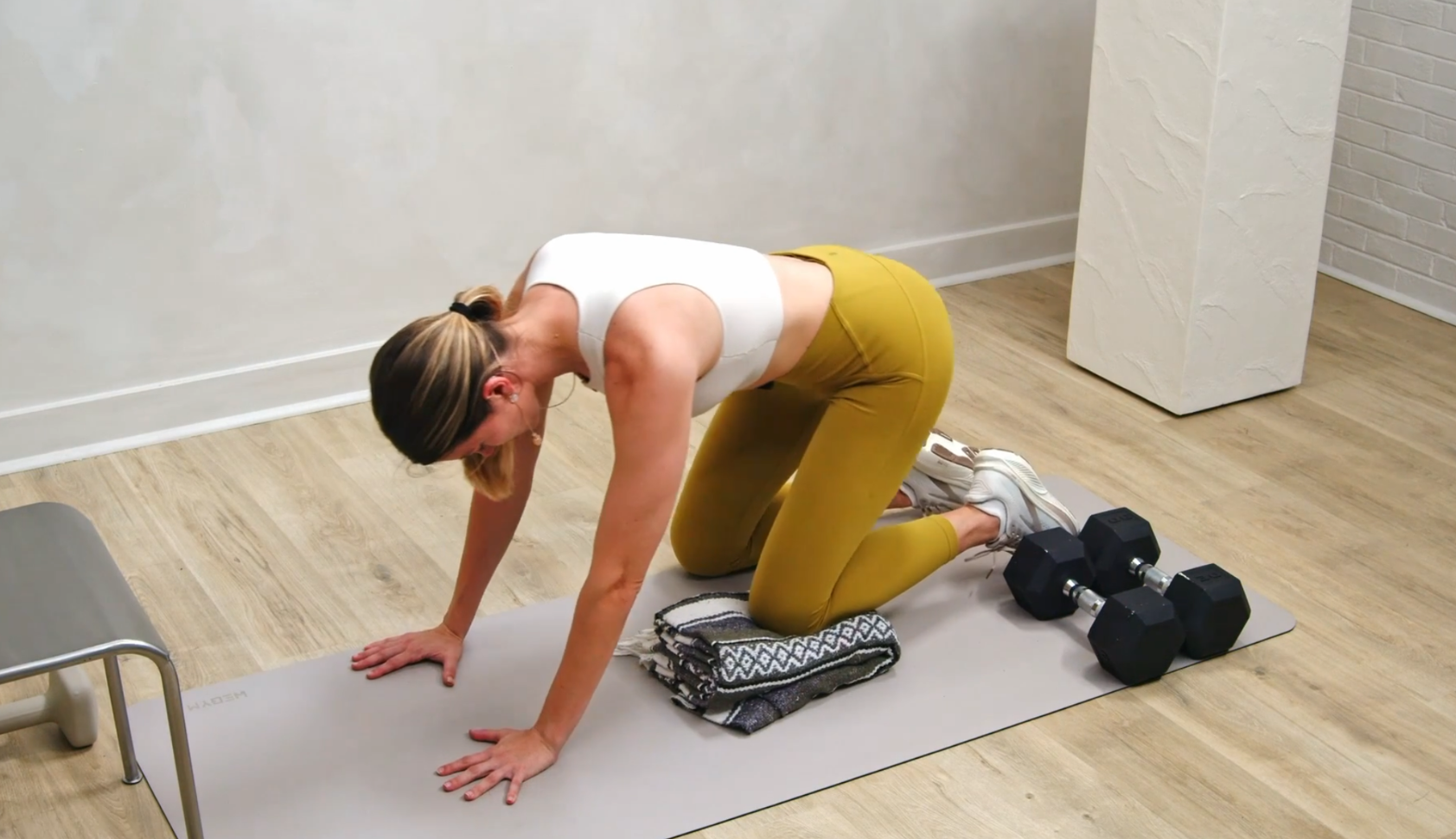
Maybe a sneeze causes you to leak a little bit…
Or pressing a dumbbell overhead creates heaviness down there…
Does this mean you need to be doing pelvic floor exercises?
Despite what you may have heard, these issues are rarely caused by pelvic floor weakness alone, which also means the solution is rarely isolated pelvic floor strengthening (aka: Kegels).
In fact, we often see symptoms arise when the pelvic floor is overactive or tight, meaning Kegels may worsen the situation!
Our pelvic floor is the floor of our core and works together with our diaphragm and deep abs to manage changes in pressure.
When you press overhead or sneeze, this creates a pressure change that our core system needs to effectively manage. And we can’t address this without addressing the ENTIRE system!
So instead of “pelvic floor workouts” or isolated pelvic floor strengthening, we need SMART training that addresses these things inside of your regular workouts.
Let me give you 3 examples of how your pelvic floor health is improved through Loa Movement classes:
1. We address ribcage expansion and position:
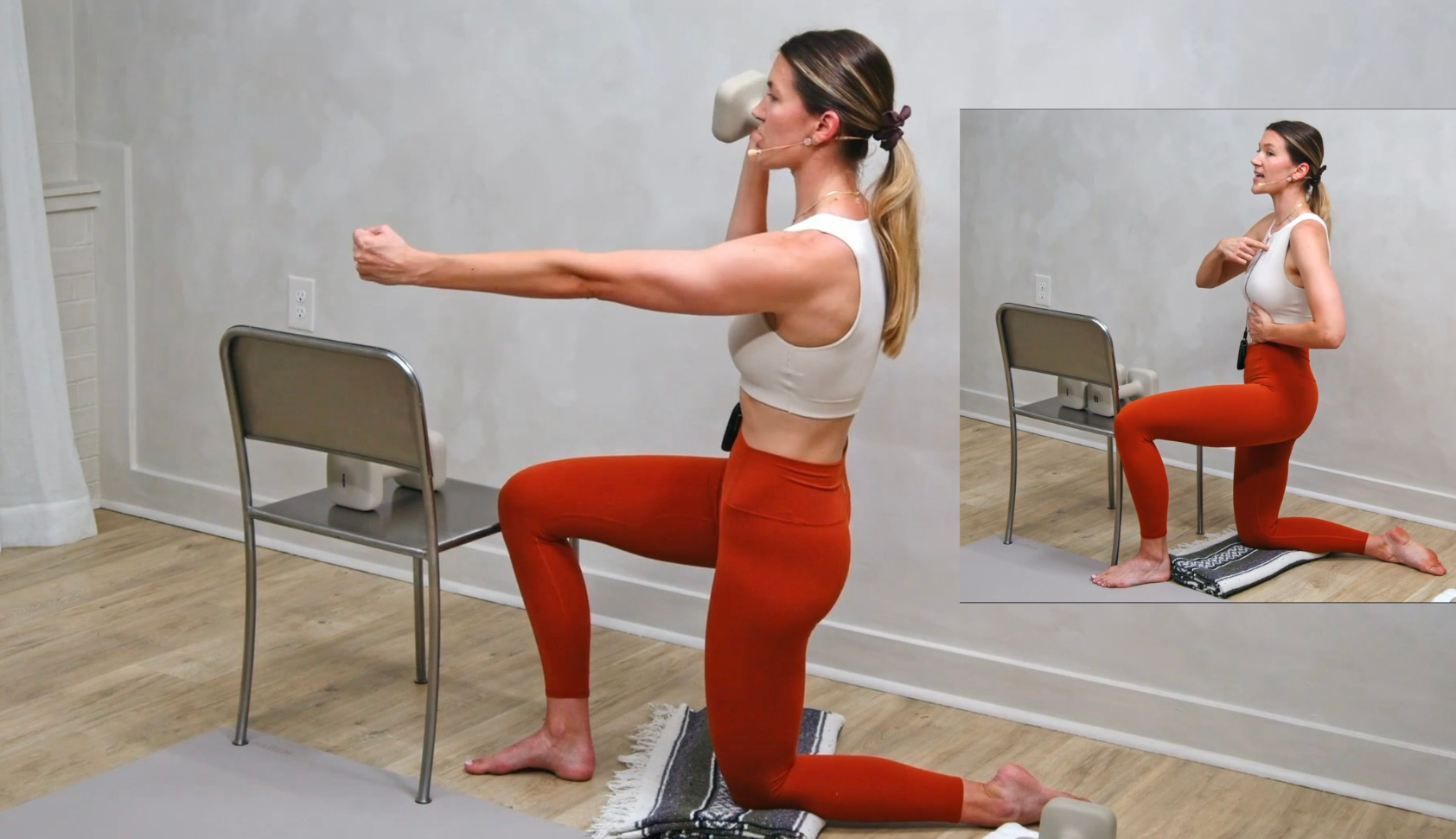
When your ribcage is unable to expand, this creates more pressure being pushed down on your pelvic floor. A healthy pelvic floor needs a ribcage that can expand on the inhale. We often address this through breathing techniques at the beginning of class.
We are also mindful of ribcage position during strength movements. When we’re pressing overhead, proper cuing of your ribcage position can massively reduce pressure on the pelvic floor and minimize the heaviness sensation.
2. We learn to hinge:
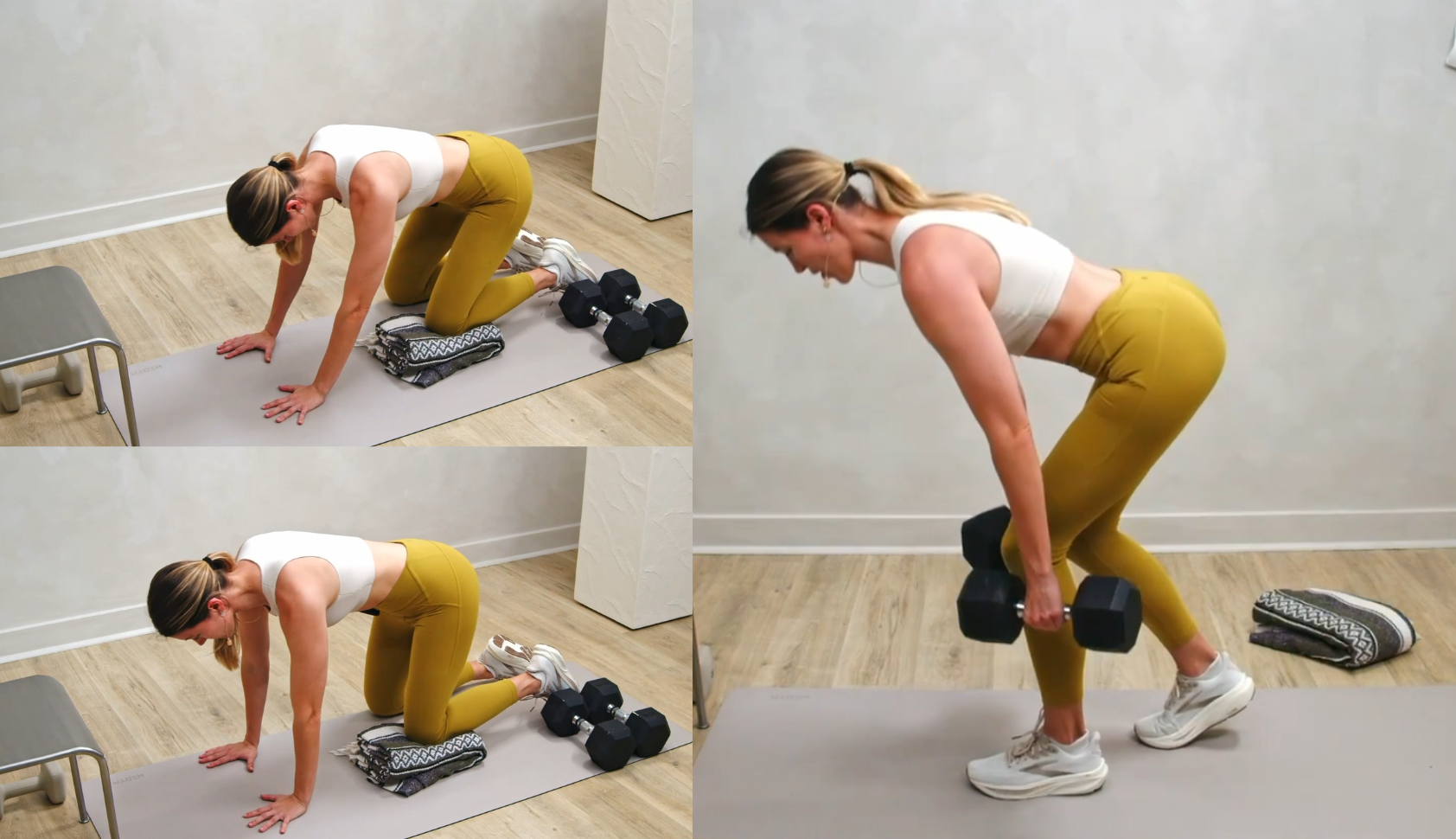
In order to properly hinge, you have to be able to lengthen through the pelvic floor. In fact, many people who “feel their lower back” during hinging movements often need pelvic floor length! This is why I love to teach an “All 4’s Rockback” with one knee on a blanket (shown above). It can help give you the ability to shift into one side of your pelvis and lengthen through the pelvic floor without compensating at the lower back.
And then of course, we follow it up with proper execution of a kickstand hinge (and other outer hip strengthening), because your pelvic floor needs strong glutes… they are anatomical neighbors, you know!
3. We challenge your core in a variety of ways:
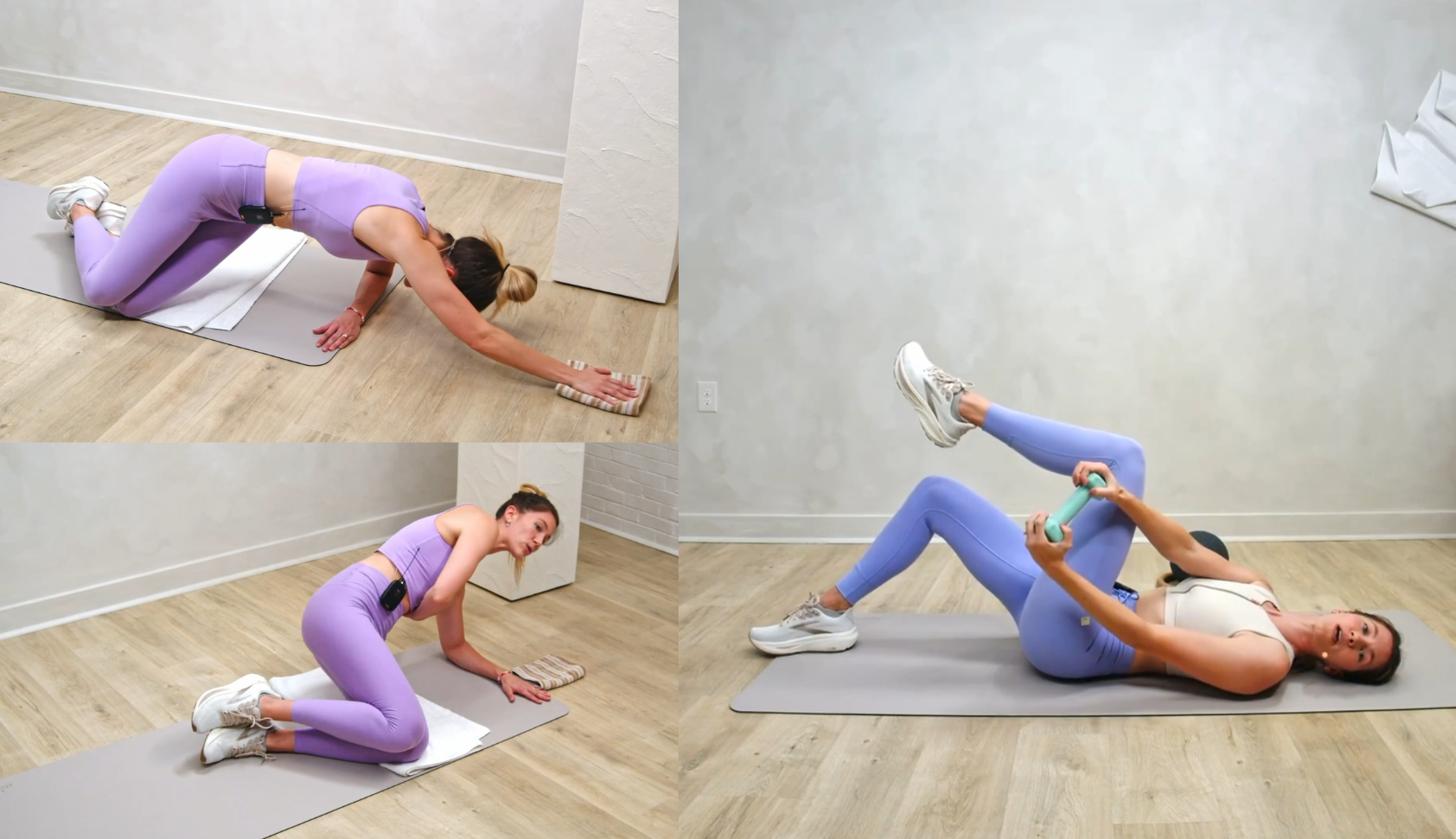
I’m definitely not against planks and crunches, but we need our core to work for us in a variety of ways- think bending, twisting, rotating, and more!
The key to mastering these movements with a “pelvic floor focus” is making sure you’re integrating your breath and distributing pressure. During our weekly Mat Core class I’m coaching you through what “excess pressure out your belly” feels like and how to improve your pressure management. These things include: finding your hamstrings to “anchor” your pelvis, creating a full exhale to recruit deep abs, and more!
So you may be asking yourself: Do we ever need to be doing “kegels?”
Probably not!
Remember that an overly tight and contracted pelvic floor can create leakage and heaviness. We want a pelvic floor that is able to both lengthen AND contract.
But that doesn’t mean I’m against isolated pelvic floor training, we just want to do it in a way that doesn’t create overactivity or excess tension.
In fact, we include a “Pelvic Floor Elevator” exercise inside of our Postpartum Program. This exercise works on gently contracting and relaxing your pelvic floor in conjunction with your breath in order to regain connection with this area of your body after childbirth.
But, this is really one tiny part of the Postpartum Program. The rest is focused much more on the things listed above, because that is what will really move the needle when it comes to function!
So in conclusion, when it comes to your pelvic floor, we want to train it as part of a complete system that works for you in every workout!
Want even more information about your core with images that really help you master these concepts?
Grab my FREE guide here: YOUR CORE RESTORE GUIDE
Ready to feel the difference smart, whole-body training makes? ➜(try 3 free classes here! No cc required!)